REVIEW OF COPY BOY BY DENNIS PATHER
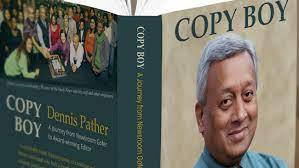
A journey from Newsroom Gofer to Award-Winning Editor
COPY BOY, a testament to the talent, resilience and perseverance of journalist and editor Dennis Pather. is summed up by Betty Govinden as ‘the story of black journalists who raised their ‘‘clenched fists of defiance“ against apartheid.’
This political memoir, published by REBEL AND RABBLE, is a great tribute to Dennis Pather’s journalistic and life skills, empathy and persistence that saw him rise to editor of the Daily News, in spite of a number of serious obstacles hurled at him by South Africa’s apartheid regime.
Dennis started his illustrious career as a copy boy or gofer, a junior worker whose duties entailed taking typed stories from one section of a newspaper floor to another. But even as a cub reporter, Dennis has always been politically aware and brave, and he has described himself as ‘cautiously optimistic.’
Before his editorship, Pather had already spent time, working on several local community newspapers and the Golden City Post, and its sister publication, Drum magazine. It was in this journalistic career that Pather was able to explore discrepancies that he found in society. For example ‘our country is adjudged the most food secure on the African continent, while one in ten South Africans go hungry every day.’
After he had completed his schooling in KwaDukuza, Dennis attended Salisbury College, on Salisbury Island in Durban, designed by the apartheid Government for Indians, and he maintains that his ‘political outlook was framed largely by my personal experiences as a victim of apartheid’, a thread that is woven throughout the book. He recalls in the book that a strict dress code was enforced at the Indian bush college on Salisbury Island and that the campus was under strict surveillance all the time.
In 1968, the family owned newspaper, The Leader, had offered Dennis Pather a job as a reporter. He remembers going into the works department at The Leader, to watch the linotype operator to see how a newspaper functioned. Sunil Bramdaw was the editor at that time and Pather described him as a ‘steely and principled journalist who was not afraid to rock the boat.’ He then moved for financial reasons to The Graphic that proved to be a professionally fulfilling three years.
When he first started at the Daily News, he was put off by the privileged elite who could vote while a vast majority of the population could not, and Dennis commented: ‘we had to settle for inferior education at poorly resourced schools and bush colleges.’
Decolonization and Transformation were keywords that were part of Pather’s vocabulary and they also informed the black consciousness movement in the 1960’s and 1970’s, a movement led by Steve Biko. Pather also mentions Strini Moodley, Saths Cooper and Mamphela Ramphele as members of the struggle against apartheid. It was their and Pather’s contention that ‘democracy fails in societies where relationships are vertical and succeeds where they are horizontal.’
Although Black journalists were making their voices heard, Pather continually found that there was a lack of diversity in news coverage. There were also bombs in streets and human rights abuses.
In his book, Pather outlines how ‘writing from a Black perspective during the apartheid era came with predictable risks.’ He himself had experienced these risks firshand. He mentioned that he received a special award from the annual conference of the National Association of Black journalists (NABJ).
One of the highlights of Dennis Pather’s career was being awarded the Nieman Fellowship in 1988, which enabled him to study at Harvard in the United States of America. It was a very fruitful time for him and his family, where he also met novelist Carlos Fuentes, Edward Kennedy, Seamus Heaney. He recalls going to Ray Charles’s concert, also to the performances of Whitney Houston and Jonathan Butler.
Pather remembers the saddest day for South Africans—when Nelson Mandela died on 5th December, 2013! The author, Dennis Pather surveys contemporary South Africa towards the end of his memoir, commenting on Corruption, Education, Protests, Right Wing Populism and Climate Change. He also names mentors to him such as Steve Biko, who was tortured and murdered by the apartheid Secret Police, Phylllis Naidoo and Aziz Hassim and he gives space to Howard Simons, managing editor of the Washington Post in 1972, who became curator of the Nieman Foundation on his retirement from the newspaper.
Pather speaks highly of another mentor, Percy Qoboza, who was a Nieman Fellow at the same time as him. The author, Dennis Pather, ends his political memoir with a selection of his insightful columns for ‘My Cheeky Tongue’ that appeared in the Sunday Tribune over a twelve-year period. Not only does this memoir outline Dennis Pather’s own rise to become editor, but it chronicles life under the apartheid regime in which he lived.
Dianne Stewart M.A. (South African Literature) M.A. (Creative Writing) dirod@iafrica.com
COPY BOY, a testament to the talent, resilience and perseverance of journalist and editor Dennis Pather. is summed up by Betty Govinden as ‘the story of black journalists who raised their ‘‘clenched fists of defiance“ against apartheid.’
This political memoir, published by REBEL AND RABBLE, is a great tribute to Dennis Pather’s journalistic and life skills, empathy and persistence that saw him rise to editor of the Daily News, in spite of a number of serious obstacles hurled at him by South Africa’s apartheid regime.
Dennis started his illustrious career as a copy boy or gofer, a junior worker whose duties entailed taking typed stories from one section of a newspaper floor to another. But even as a cub reporter, Dennis has always been politically aware and brave, and he has described himself as ‘cautiously optimistic.’
Before his editorship, Pather had already spent time, working on several local community newspapers and the Golden City Post, and its sister publication, Drum magazine. It was in this journalistic career that Pather was able to explore discrepancies that he found in society. For example ‘our country is adjudged the most food secure on the African continent, while one in ten South Africans go hungry every day.’
After he had completed his schooling in KwaDukuza, Dennis attended Salisbury College, on Salisbury Island in Durban, designed by the apartheid Government for Indians, and he maintains that his ‘political outlook was framed largely by my personal experiences as a victim of apartheid’, a thread that is woven throughout the book. He recalls in the book that a strict dress code was enforced at the Indian bush college on Salisbury Island and that the campus was under strict surveillance all the time.
In 1968, the family owned newspaper, The Leader, had offered Dennis Pather a job as a reporter. He remembers going into the works department at The Leader, to watch the linotype operator to see how a newspaper functioned. Sunil Bramdaw was the editor at that time and Pather described him as a ‘steely and principled journalist who was not afraid to rock the boat.’ He then moved for financial reasons to The Graphic that proved to be a professionally fulfilling three years.
When he first started at the Daily News, he was put off by the privileged elite who could vote while a vast majority of the population could not, and Dennis commented: ‘we had to settle for inferior education at poorly resourced schools and bush colleges.’
Decolonization and Transformation were keywords that were part of Pather’s vocabulary and they also informed the black consciousness movement in the 1960’s and 1970’s, a movement led by Steve Biko. Pather also mentions Strini Moodley, Saths Cooper and Mamphela Ramphele as members of the struggle against apartheid. It was their and Pather’s contention that ‘democracy fails in societies where relationships are vertical and succeeds where they are horizontal.’
Although Black journalists were making their voices heard, Pather continually found that there was a lack of diversity in news coverage. There were also bombs in streets and human rights abuses.
In his book, Pather outlines how ‘writing from a Black perspective during the apartheid era came with predictable risks.’ He himself had experienced these risks firshand. He mentioned that he received a special award from the annual conference of the National Association of Black journalists (NABJ).
One of the highlights of Dennis Pather’s career was being awarded the Nieman Fellowship in 1988, which enabled him to study at Harvard in the United States of America. It was a very fruitful time for him and his family, where he also met novelist Carlos Fuentes, Edward Kennedy, Seamus Heaney. He recalls going to Ray Charles’s concert, also to the performances of Whitney Houston and Jonathan Butler.
Pather remembers the saddest day for South Africans—when Nelson Mandela died on 5th December, 2013! The author, Dennis Pather surveys contemporary South Africa towards the end of his memoir, commenting on Corruption, Education, Protests, Right Wing Populism and Climate Change. He also names mentors to him such as Steve Biko, who was tortured and murdered by the apartheid Secret Police, Phylllis Naidoo and Aziz Hassim and he gives space to Howard Simons, managing editor of the Washington Post in 1972, who became curator of the Nieman Foundation on his retirement from the newspaper.
Pather speaks highly of another mentor, Percy Qoboza, who was a Nieman Fellow at the same time as him. The author, Dennis Pather, ends his political memoir with a selection of his insightful columns for ‘My Cheeky Tongue’ that appeared in the Sunday Tribune over a twelve-year period. Not only does this memoir outline Dennis Pather’s own rise to become editor, but it chronicles life under the apartheid regime in which he lived.
Dianne Stewart M.A. (South African Literature) M.A. (Creative Writing) dirod@iafrica.com